“You don’t have to learn every tool. You have to learn what your
work actually needs.”
Michael had watched technology change the way people worked. New platforms, tools and
workflows appeared regularly, and he felt uncertain about where to begin. He realised that
trying to learn every tool was not a strategy.
Recognise the Roles Becoming Digital
Many jobs now involve digital communication, organising information, online collaboration or learning
new software. The useful skill is not simply knowing a particular tool—it is adapting thoughtfully to
changing tasks.
Decide Where to Begin
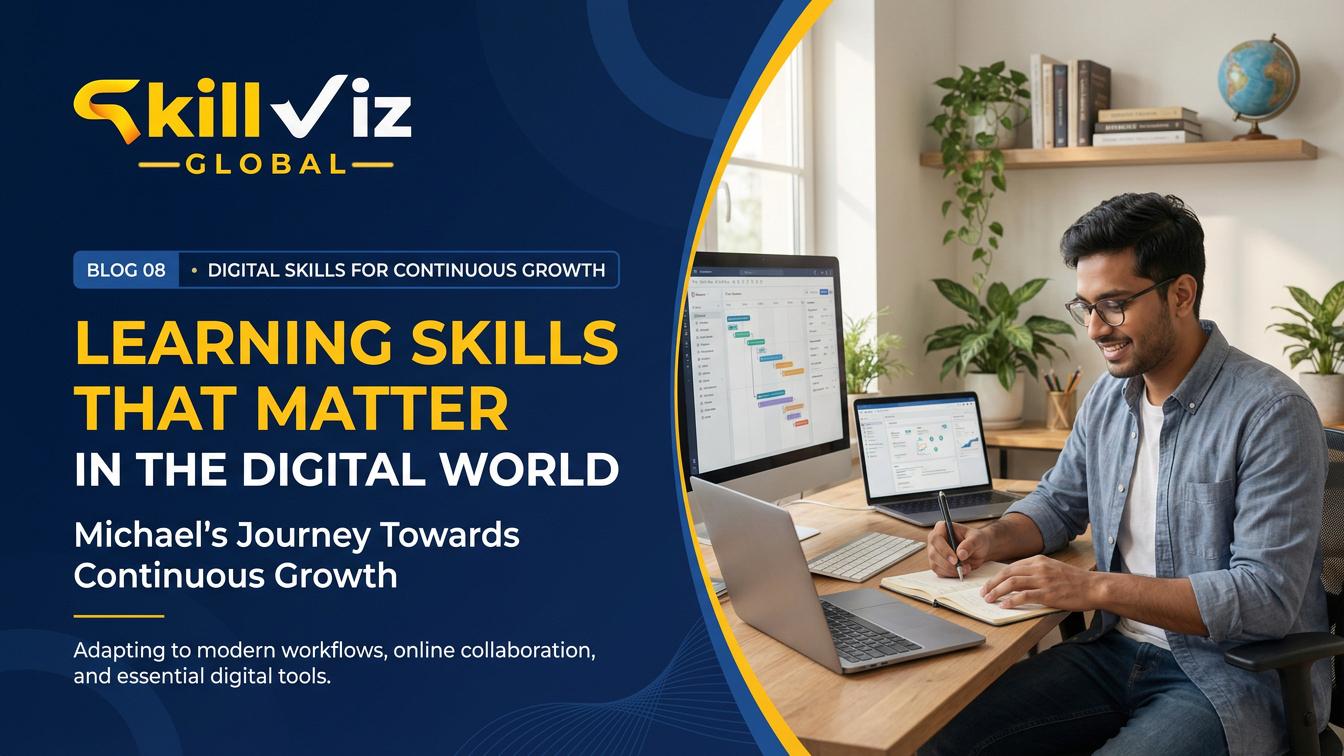
Michael reviewed his daily work and chose practical needs: managing files, writing clearer digital
messages, organising tasks, using spreadsheets and joining online meetings. He selected one tool or
skill at a time.
Learn by Doing
Instead of watching endless tutorials, he set small projects. He organised a folder system, built a basic
tracker and practised sharing documents. Each project gave him a reason to apply what he learned.
Connect Digital Skills and Communication
Michael learned that tools did not replace communication. Clear instructions, thoughtful messages,
meeting etiquette, feedback and collaboration still mattered. Digital work was more effective when he
paired technical practice with communication.
Develop a Growth Mindset
When he encountered a new platform, Michael looked for reliable guidance, experimented carefully and
asked specific questions. He kept notes on what worked and revisited skills as needed.
Key Takeaways
- Choose skills based on real tasks.
- Practise through small projects.
- Learn to evaluate information.
- Communicate clearly online.
- Stay curious without trying to master everything at once.
Digital learning is an ongoing process. Michael’s progress began not with the newest tool,
but with a clear need and consistent effort.